Hits: 334 img
With the rapid development of materials science, various new functional materials continue to emerge, providing essential support and foundation for technological advancements across industries. Aerogels, as lightweight porous materials with exceptional properties and unique structures, are widely used in energy conservation, aerospace, and biopharmaceutical fields.
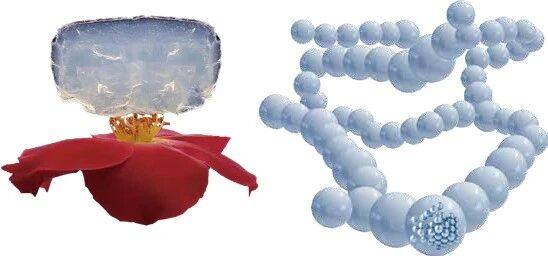
Among them, inorganic hybrid aerogels are an important type of aerogels. They can leverage the advantageous properties of both organic and inorganic materials to compensate for the disadvantages of a single material in terms of performance, and meet the material demands of various industries. Therefore, in order to further promote the development of science and technology in our country and technological progress, it is necessary for us to explore the characteristics and advantages of inorganic hybrid aerogels, in order to empower innovative breakthroughs and technological updates in related fields.
1. Introduction to Inorganic Hybrid Aerogels
Inorganic hybrid aerogels are aerogel materials formed by the physical or chemical reaction of organic and inorganic components. They are not a simple mixture of the two substances, but through the reaction, the two components form a synergistic effect in terms of performance and structure, thereby creating a new type of material with unique characteristics and performance.
From the composition perspective, the organic components in inorganic hybrid aerogels mainly include epoxy resin, polyimide, and polyurethane, which can effectively enhance the flexibility of the material. The inorganic materials include zirconium oxide, aluminum oxide, and silicon dioxide, ensuring the material has strong mechanical strength, chemical and thermal stability.
From the preparation process perspective, it requires going through the steps of sol, gel, aging, and drying. The sol-gel process requires placing inorganic or organic precursors in a specific environment for reaction to form a sol system, and then adding a crosslinking agent or adjusting the temperature and pH value to make the system gel and form a gel.
To improve its gel stability, it needs to be left to stand for several hours or days (aging). When the network structure of the gel is sufficiently stable, it needs to be dried using freeze-drying, supercritical drying, or atmospheric pressure drying methods to remove the solvent from the gel, so that the aerogel has a porous structure and effectively improves various properties. With the rapid development of materials science, the preparation technology of inorganic hybrid aerogels will also be further improved. By applying various digital technologies and information technologies, the efficiency of material preparation can be effectively improved.
2 Basic Characteristics of Inorganic Hybrid Aerogels
Inorganic hybrid aerogels are a new type of material that combines the advantages of inorganic and organic substances, featuring unique microstructures, excellent performance, and high controllability.
Firstly, the unique microstructure. Due to the uniqueness of the constituent components and the preparation process, inorganic hybrid aerogels possess a typical porous network structure. Their porosity is relatively high, generally ranging from 80% to 99.8%, and most of them are mesopores and micropores at the nanometer scale, thus having a relatively high specific surface area, which can reach several hundred square meters per gram, allowing inorganic hybrid aerogels to have a relatively rich number of active sites.
Secondly, the performance. Inorganic hybrid aerogels possess excellent properties such as lightness, heat insulation, stability, and strong mechanical properties:
(1) Lightness. Due to the extremely high porosity and uniform distribution of inorganic hybrid aerogels, their density is relatively low, making them one of the lightest solid materials known to date, and they can be widely applied in construction, aerospace, and other fields.
(2) Heat insulation. Inorganic hybrid aerogels have a nano-scale pore structure, which can effectively block the transmission of heat energy, whether through heat radiation, convection, or conduction. They exhibit excellent heat insulation performance.
(3) Stability. Inorganic hybrid aerogels are new materials formed by molecular-level reactions between inorganic and organic components. The presence of inorganic components gives them strong "alkali resistance," "acid resistance," and "resistance to organic solvents," and they can even maintain performance and structure stability in harsh chemical environments.
(4) Mechanical properties. Through scientific hybrid design, inorganic hybrid aerogels possess high flexibility and mechanical strength, are not prone to cracking, and can withstand certain bending and pressure, providing necessary foundation and support for expanding their application dimensions.
(5) Controllability. In the preparation of inorganic hybrid aerogels, people can control their properties and structure by changing the proportion and type of organic or inorganic components. For example, changing the drying conditions can affect the pore distribution; changing the proportion of organic or inorganic components can regulate their "density," "porosity," and "mechanical properties."
3 Main Advantages of Inorganic Hybrid Aerogels
Inorganic hybrid aerogels have significant advantages in terms of performance, application, and cost due to their rich and remarkable material characteristics.
Firstly, in terms of performance, inorganic hybrid aerogels possess the processing and flexibility of organic components, as well as the mechanical and stability properties of inorganic materials. Moreover, compared with pure inorganic aerogels and organic aerogels, their "stability", "mechanical properties", and "flexibility" are relatively higher. And during long-term use, regardless of harsh environments such as high temperatures and humidity, their structure and performance remain relatively stable.
Secondly, in terms of application advantages, inorganic hybrid aerogels are widely used in fields such as construction, energy, environmental protection, and aerospace due to their performance advantages. For example, in the aerospace field, they are used as thermal insulation materials for spacecraft, not only with excellent thermal insulation performance but also with lightweight materials; in the environmental protection field, they can play roles in air purification and wastewater treatment, utilizing their extremely high specific surface area to adsorb various pollutants.
Finally, in terms of cost advantages, in the preparation of inorganic hybrid aerogels, the required inorganic and organic precursors are relatively inexpensive, and although the preparation process is complex, the overall cost is relatively low, thus having a high cost-performance ratio and being widely applicable in various social fields to meet the requirements of different application scenarios. Especially in the process of technological innovation and iteration, inorganic hybrid aerogels can meet many demands of technological development by virtue of their performance advantages, application advantages, and cost advantages, thereby enhancing the effectiveness of technological innovation.
Inorganic hybrid aerogels are a new type of material with excellent performance, typical structure, and wide application scenarios. They can play roles such as lightness, insulation, stability, and mechanical properties according to different application scenario requirements, providing support for China's scientific and technological innovation and the high-quality development of related fields. With the development of the times, the preparation process of inorganic hybrid aerogels is expected to be optimized and innovated, making their performance advantages, process characteristics more distinct, and applying to more extensive and updated fields.